How the work actually gets done.
Most consultants run software. We write the calculation — so that when a drawing changes, everything that depends on it changes with it, and every number can be traced back and signed for.
The calculation is written, not repeated.
An estimate for a culvert is a parametric workbook: change the span, the cell size or the wall thickness and the measurement sheet, the bar bending schedule and the abstract all follow.
Quantities are linked to the drawing.
Geometry is read from the DWG or DXF rather than keyed in from it. When a drawing is revised, the quantities are regenerated, not patched.
Every number has a source.
Each item carries its schedule-of-rates reference; each quantity traces back to a dimension on a drawing.
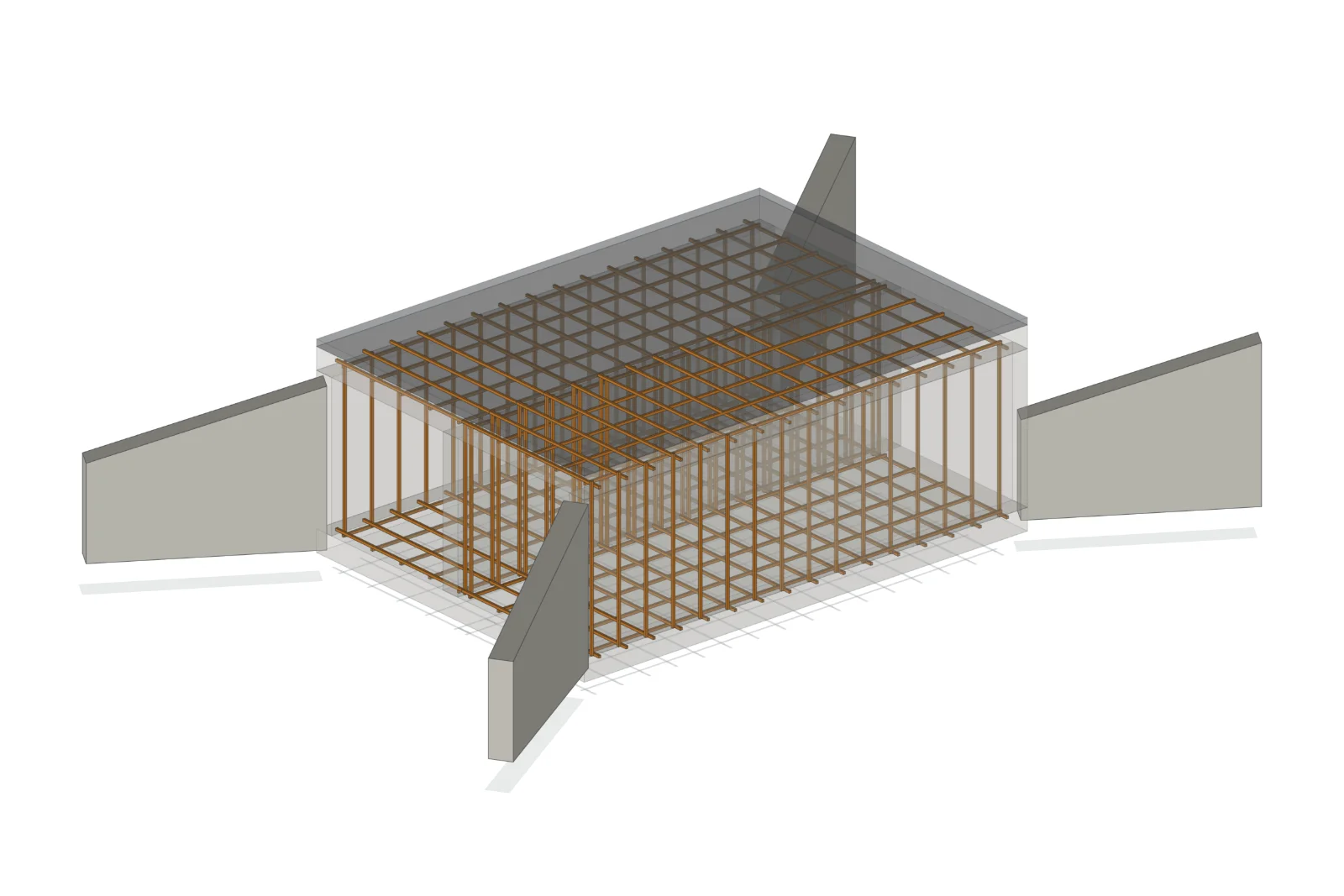
One tool among Python, MATLAB, VBA and Excel.
We use AI-assisted tooling for drafting, document checking and routine conversion work, and we say so plainly. It is useful for speed, never a substitute for judgement. No output leaves this office without an engineer checking it and taking responsibility for it. Client drawings and project data are not used to train anything.
Confidentiality, in writing.
- Written non-disclosure agreement offered as standard on every engagement.
- Client data stored within India and never shared with third parties.
- Access restricted to the individuals working on the assignment.
- Full data export and deletion available to the client on request.
- Farmer and village data treated as belonging to the community that generated it.
Bring us the drawing, not the problem statement.
Send the GAD, the schedule or the survey — we will come back with what can be computed from it, and how fast.
Start the conversation →